A Beginner’s Guide to Registering Your Company with Companies House
Starting a Business? This Is Your First Real Step
Every business begins with an idea but turning that idea into something official is a completely different step.If you’re planning to start a business in the UK, one name you’ll hear again and again is Companies House.
And yes it might sound technical or even a bit intimidating at first.But here’s the truth is registering your company is much simpler than most beginners think.This guide will walk you through everything clearly, practically, and without unnecessary jargon.
What is a Company's House and Why Does It Matter?
Companies House is the UK government body responsible for:
- Registering companies
- Storing company information
- Making business data publicly available
Once your company is registered, it becomes a legal entity. That means:
- You can trade under a business name
- Open a business bank account
- Build credibility with clients
Without this step, your business isn’t officially recognised in the UK.
Do You Actually Need to Register a Company?
Not everyone needs to register with Companies House right away.
You typically need to register if:
- You want to operate as a limited company (Ltd)
- You want to protect your personal assets
- You plan to scale or work with larger clients
If you're just testing an idea, you might start as a sole trader but serious growth usually leads to company registration.
Step 1: Choose Your Company Name
This might seem easy but it’s more important than you think.
Your company name must:
- Be unique (not already registered)
- Follow UK naming rules
Not include restricted or sensitive words.You can check name availability directly on Companies House.
Tip: Choose a name that also works well for your website domain and branding.
Step 2: Decide Your Company Structure
Most beginners choose a private limited company (Ltd).
Why?
- Limited liability protection
- Professional image
- Easier to scale
Other structures exist, but for most startups, Ltd is the simplest and most effective option.
Step 3: Choose a Registered Office Address
Every UK company must have a registered address.This is where official mail from Companies House will be sent.
You have two options:
- Use your home address
- Use a virtual office address UK
Many businesses prefer a virtual office because it:
- Protects privacy
- Looks more professional
- Keeps personal and business life separate
Step 4: Appoint Directors and Shareholders
To register your company, you need:
- At Least One Director
- Responsible for running the company
- Must be over 16 years old
- Shareholders
- Owners of the company
Can be the same person as the director
For most beginners, you can be:
Director + sole shareholder
Step 5: Prepare Your Documents
You’ll need a few key details before registering:
- Company name
- Registered address
- Director information
- Shareholder details
SIC code (explains what your business does)
Don’t worry this is simpler than it sounds and mostly form-based.
Step 6: Register Your Company Online
The easiest way to register is directly through Companies House online.
What to expect:
- Takes around 10–15 minutes
- Costs a small registration fee
- Approval usually within 24 hours
Once approved, you’ll receive:
- Certificate of Incorporation
- Company number
And just like that your business is officially registered
What Happens After Registration?
This is where many beginners get confused.Registering with Companies House is just the start.
Next steps include:
1. Register for Corporation Tax
You must register with HM Revenue & Customs within 3 months.
2. Open a Business Bank Account
Keeps your finances organised and professional.
3. Maintain Company Records
You’ll need to:
- File annual accounts
- Submit confirmation statements
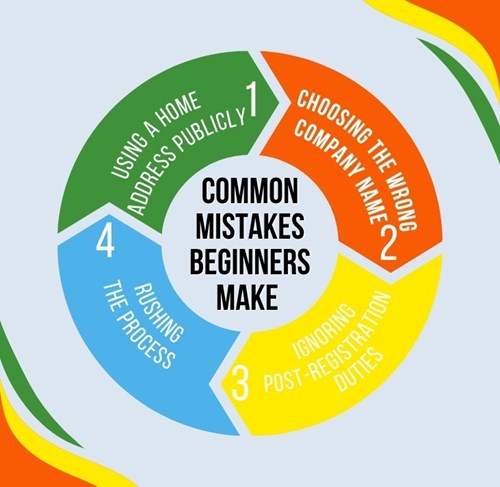
Common Mistakes Beginners Make (And How to Avoid Them)
Starting a company with Companies House is simple, but small mistakes can cause problems later. Here are the most common ones to watch out for:
Using a Home Address Publicly
Many beginners use their home address when registering, without realising it becomes publicly visible on Companies House records. This can affect your privacy and look less professional.A better option is using a virtual office address UK, which keeps your personal details private while giving your business a more professional image.
Choosing the Wrong Company Name
Picking a name too quickly can lead to issues later. If the name is already taken or doesn’t fit your brand, you may have to rebrand which takes time and effort.It’s always better to check availability and choose a name that works for your business long-term.
Ignoring Post-Registration Duties
Registering your company is just the first step. You’ll still need to file annual accounts and stay compliant with HM Revenue & Customs.
Missing deadlines can lead to penalties, so it’s important to stay organised from the start.
Rushing the Process
Many beginners rush through registration and make small mistakes in details like address, director info, or business activity.Taking a little extra time to review everything carefully helps avoid problems later.
Why Many Entrepreneurs Use Virtual Offices When Registering
This is becoming the new normal.Instead of using a home address, businesses choose a virtual office address UK because:
- It builds trust
- Enhances brand image
- Supports privacy
- Helps with expansion
It’s a small decision that makes a big difference.
Is It Worth Registering a UK Company in 2026?
Short answer: Yes.The UK remains one of the easiest and most business-friendly places to:
- Start a company
- Manage operations
- Scale globally
That’s why even international founders choose to register through Companies House.
Why Choose IBC for Your Business Setup
IBC is a trusted provider that helps entrepreneurs and businesses register their companies smoothly with Companies House while offering essential support services along the way. From providing a professional virtual office address UK to managing mail and simplifying the setup process, IBC ensures everything is handled efficiently and without stress. Whether you're a beginner starting your first company or an international founder entering the UK market, IBC offers flexible and affordable solutions to give your business a strong, credible start.
Final Thoughts: It’s Easier Than You Think
Registering your company might feel like a big step but it’s actually one of the simplest parts of starting a business.Once you understand the process, it becomes straightforward:
- Choose a name
- Set your structure
- Register online
Handle post-registration basics and you’re officially in business.