HMRC Letters Explained for Limited Companies
There is something uniquely unsettling about receiving a letter from HMRC.Even before opening it, most business owners experience a small psychological shift. The envelope carries weight disproportionate to its size. It suggests urgency, obligation, perhaps even danger. And yet, in many cases, HMRC letters are entirely routine.
The problem is not always the content. It is uncertain.For limited companies particularly startups, remote businesses, and international founders understanding HMRC correspondence is an essential part of staying compliant. And increasingly, this intersects with another modern business reality: the use of the best virtual office UK solutions to manage official communication efficiently.Because ultimately, a missed HMRC letter is rarely just a missed letter. It can become a missed deadline, a penalty, or a much larger administrative problem.
Why HMRC Sends Letters to Limited Companies
HMRC communicates with limited companies for a simple reason: businesses have obligations, and obligations require records.
Letters may relate to:
- Corporation Tax
- VAT registration
- PAYE and payroll
- Filing reminders
- Penalties or late submissions
- Verification checks
- Changes to tax codes or regulations
Some are informational. Others require immediate action. The difficulty, especially for remote businesses, lies in ensuring these letters are received promptly and handled correctly.This is one reason many companies rely on the best virtual office UK providers for official correspondence.
Where HMRC Sends Its Letters
HMRC generally sends correspondence to the address registered with Companies House or the address associated with a particular tax service.
This means your registered office address matters enormously.For businesses using a virtual office address UK, the quality of mail handling becomes critical. A reliable provider ensures that:
- Letters are received securely
- Notifications are sent quickly
- Mail can be scanned or forwarded internationally
- Sensitive documents remain confidential
In other words, your address is not merely symbolic, it is operational infrastructure.
The Most Common HMRC Letters Explained
Not all HMRC letters mean the same thing. Understanding the difference reduces unnecessary panic and helps businesses respond appropriately.
1. Corporation Tax Registration Letter
After forming a limited company, HMRC typically sends a letter containing your Unique Taxpayer Reference (UTR).
This number is essential for:
- Filing Corporation Tax returns
- Communicating with HMRC
- Managing company taxes
Missing this letter can delay important registrations and compliance tasks.
This is why businesses using the best virtual office UK prioritize providers with dependable mail forwarding systems.
2. VAT Registration Confirmation
If your business registers for VAT, HMRC will send confirmation letters containing:
- VAT registration number
- Effective registration date
- Filing instructions
For international businesses relying on international virtual office services, delays in receiving these letters can create operational issues quickly.
3. Filing Reminder Notices
These are among the most common HMRC communications.
They remind companies about:
- Corporation Tax deadlines
- VAT submissions
- PAYE obligations
Ignoring them often leads to penalties not because the rules are harsh, but because the deadlines are fixed.A properly managed virtual office London UK setup helps ensure these reminders are received and acted upon promptly.
4. Penalty Notices
This is the category most businesses fear.Penalty letters may relate to:
- Late tax returns
- Missed payments
- Incorrect filings
But it is worth noting something important: penalties are often administrative rather than accusatory. HMRC systems are highly automated. Missing a deadline, even unintentionally, usually triggers a standard process.Still, avoiding these situations depends heavily on receiving correspondence reliably.
5. Compliance or Verification Checks
Occasionally, HMRC may request additional information to verify company details or confirm tax activity.These letters can feel intimidating, but they are often routine checks rather than investigations.Businesses using the best virtual office UK typically benefit from professional mail management that ensures such correspondence is handled without delay.
Why Virtual Offices Matter for HMRC Correspondence
Historically, businesses operated from fixed premises, making official communication relatively straightforward.Modern businesses are different.A founder may live abroad. Teams may work remotely. Operations may span multiple countries. In this environment, a traditional office is often unnecessary but reliable communication still is.This explains the rise of the best virtual office UK services.
A quality virtual office service provider offers:
- Secure receipt of official letters
- Fast forwarding options
- Mail scanning services
- Stable business continuity
For expats and remote founders, this becomes less of a convenience and more of a necessity.
The Difference Between a Good and Bad Virtual Office
Not all providers handle HMRC correspondence equally well.A low-quality provider may:
- Delay notifications
- Mishandle sensitive documents
- Offer limited forwarding options
- Create compliance risks
This is where businesses often make mistakes by choosing solely based on price.An affordable virtual office is valuable only if it functions reliably when important documents arrive.
Why Address Credibility Still Matters
There is another subtle factor here: trust.A credible business address influences how institutions perceive your company. A recognized virtual office London UK address, for example, can strengthen legitimacy while maintaining privacy and flexibility.
Similarly, a virtual office east London location may appeal to startups and creative businesses, while a virtual office address Birmingham may offer practical affordability without sacrificing professionalism.
The address itself does not change your obligations but it shapes the framework through which your business operates.
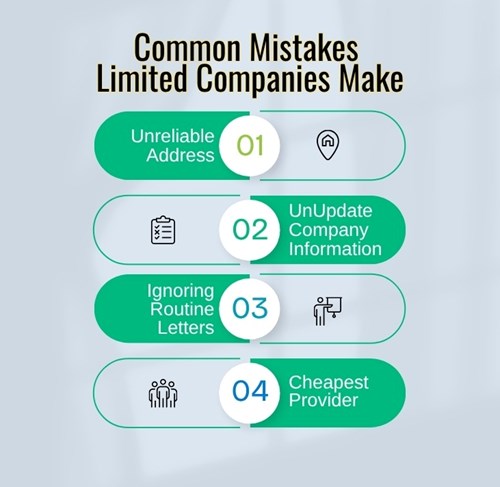
Common Mistakes Limited Companies Make
There are recurring patterns in HMRC-related problems:
Using an Unreliable Address
If correspondence is delayed, deadlines are easily missed.
Failing to Update Company Information
Businesses sometimes move operations but forget to update official records.
Ignoring Routine Letters
Not every HMRC letter is urgent, but every letter should be reviewed.
Choosing the Cheapest Provider
Searching “virtual office near me” or opting for the lowest-cost solution often leads to poor service quality.The best virtual office services focus on consistency, not just affordability.
Remote Business and International Founders
For international entrepreneurs, HMRC correspondence presents a unique challenge.
You may:
- Operate from another country
- Travel frequently
- Lack a permanent UK residence
In these situations, a dependable virtual office address UK provides stability. Combined with international virtual office services, it ensures that important communication continues uninterrupted regardless of location.
Why IBC Is a Practical Choice
At IBC, the goal is simple: provide reliable, compliant, and professionally managed virtual office solutions for modern businesses.
By offering secure mail handling, prompt forwarding, and credible UK business addresses, IBC helps limited companies manage official communication efficiently whether they are based locally or operating internationally.
Whether you need the best virtual office UK, a virtual office services London solution, or broader international virtual office services, the emphasis remains on reliability, compliance, and continuity.Because when it comes to HMRC correspondence, certainty matters.
Final Thoughts
HMRC letters often feel more intimidating than they really are. Most are routine. Many are automated. Almost all are manageable provided they are received, understood, and addressed on time.
And perhaps that is the real lesson here.Business compliance is rarely about dramatic moments. It is about systems. Processes. Quiet administrative reliability.The best virtual office UK providers succeed because they support exactly that: the invisible structure that allows businesses to operate smoothly, even across borders.Because in modern business, being reachable is not just convenient.It is essential.